Heat Wave Notice! Due to the current heat wave, we will hold all orders until temperatures are safe for posting. Estimated posting date: 17/08
Cubaris Cherry Blossom Isopod
Low stock! Only 8 left
Regular price
£40.00 GBP
Sale price
£40.00 GBP
Regular price
£100.00 GBP
Unit price
per
Tax included.
Shipping calculated at checkout.
Couldn't load pickup availability
- Fully secure checkout
- Trusted by thousands
- Rated and reviewed
Want next day delivery? Be quick!
You just missed it!
Question about this product?
We're happy to help.
Up to 60% off
Cubaris Cherry Blossom Isopods for Sale UK
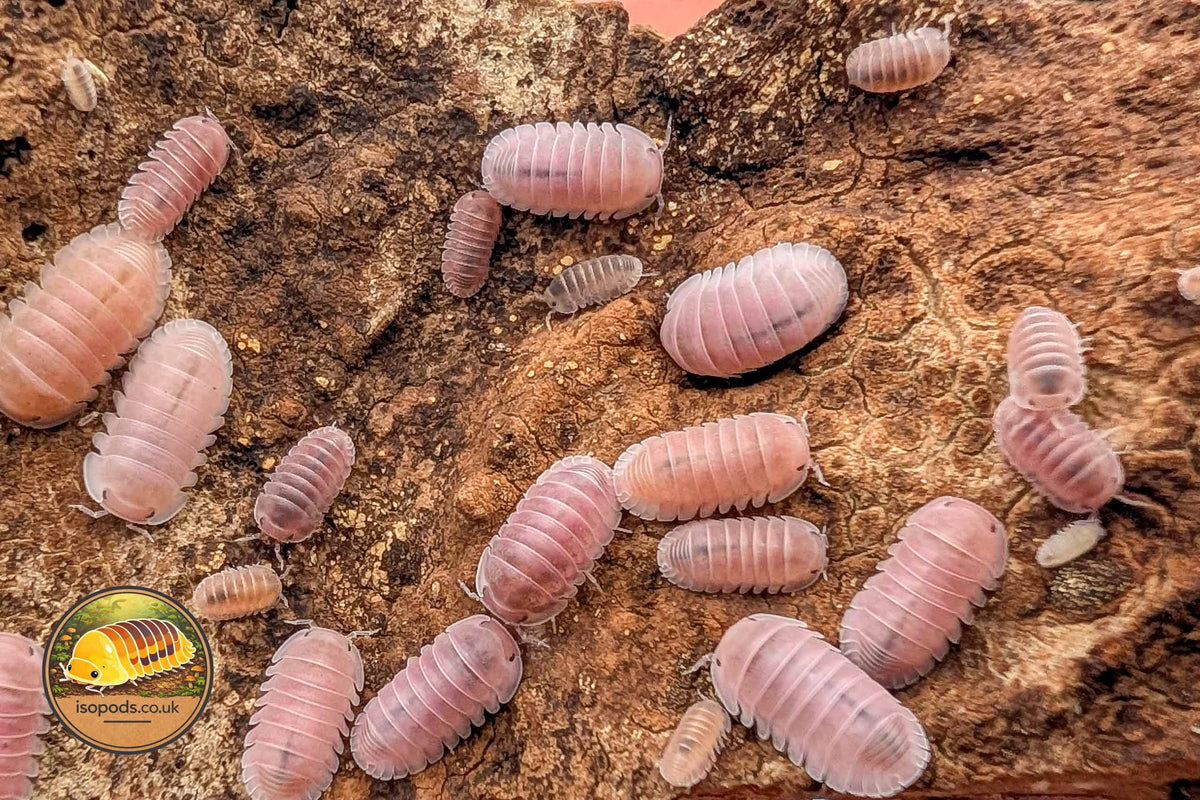
Cubaris Cherry Blossom stands out for its soft, petal-like look rather than bold contrast. The pale base colour, subtle pink tones, and gentle white accents give this morph a delicate cherry-blossom feel that suits collectors who prefer understated beauty over louder patterning.
In the enclosure, this is still very much a Cubaris type: usually shy at first, strongly cover-using, and best appreciated in a humid, well-furnished setup with deep substrate, bark, leaf litter, and a reliable damp refuge. Once settled, they may be seen more often around covered bark edges and sheltered feeding spots, but they are not a species to buy for constant open roaming.
What makes Cherry Blossom different
The appeal here is refinement. Cherry Blossom tends to draw attention through soft pastel tones and a cleaner, lighter look, not through dramatic high-contrast markings. If you enjoy collector species that reward close observation, this is the kind of Cubaris that can feel especially elegant in a natural, well-covered tropical enclosure.
- Look: pale overall colour with gentle pink hues and soft white accents
- Style: more delicate and pastel than bold or graphic
- Behaviour: quiet, shelter-oriented, and usually calmer than surface-active genera
- Visibility: often hidden at first, sometimes easier to spot once the colony feels settled and secure
How they usually behave
Cherry Blossom often spends time under bark, within deeper leaf litter, or in humid lower pockets of the enclosure rather than out on open substrate. That does not automatically mean something is wrong. For Cubaris, hidden behaviour can be completely normal if the colony is using several covered areas, feeding gradually, and not compressed into one emergency refuge.
If every animal stays packed into one damp corner, the rest of the enclosure may be too dry, too exposed, or too stale. A better sign is when they start using more than one sheltered spot, especially around bark undersides, litter edges, and damp covered areas.
Enclosure style that suits them
Cherry Blossom is best treated as a humid, shelter-loving tropical isopod. Aim for depth, cover, and choice rather than a flat wet tub. Good setups usually include cork or bark hides, decomposing material, and one dependable humid area that stays damp below the surface without turning the whole enclosure soggy.
A piece of cork bark helps create shaded undersides and tighter hiding spaces, while sphagnum moss can help keep a moist refuge stable. The drier side should still be usable, with litter and cover in place, so they do not have to cross bare open ground to move around.
Airflow matters here as much as humidity. This species usually does better in a humid enclosure that still smells fresh and earthy than in a sealed, wet tub that turns stale.
Feeding and long-term support
Like other Cubaris, Cherry Blossom should be fed as a detritus-first species. The enclosure itself should do most of the work: leaf litter, decomposing organic matter, mature substrate, and rot wood all help provide long-term grazing under cover.
Fresh foods are better treated as extras than as the core diet. If the colony only seems active when rich food is added, the enclosure food base is often too thin. Consistent mineral access is also worth providing, and limestone can be a useful long-term support item in Cubaris setups.
Before you order
- Prepare a deeper substrate layer rather than a shallow starter tub.
- Make sure there is plenty of leaf litter and more than one covered hiding place.
- Set up a damp refuge that stays moist without soaking the whole enclosure.
- Keep expectations realistic: this is a collector-led Cubaris, not a bold display runner.
- Plan to leave the colony relatively undisturbed while it settles.
Who tends to enjoy this species most
Cherry Blossom makes the most sense for keepers who like subtle colour, quieter enclosure behaviour, and the slower reward of seeing a tropical colony settle properly. It is a good match for buyers who enjoy checking under bark, reading enclosure use over time, and building a covered setup that feels secure rather than sparse.
If you mainly want an isopod that spends lots of time out in the open, this one may feel too reserved.
Compare before you choose
If you are deciding between similar tropical options, browse our Cubaris isopods for more shelter-loving species. For another soft-toned same-genus comparison, Cubaris Ice Flower is worth a look, while Cubaris Red Edge Peach offers a different pastel-leaning Cubaris direction. If you want broader setup help before ordering, our Cubaris care guide explains how to balance humidity, cover, feeding, and airflow.
Ease of care
Preferred Temperature
Preferred Humidity
Popularity
Care Instructions
Care Instructions